Written by: Anne-Louise Plane
Photos by: Violette Stevenson
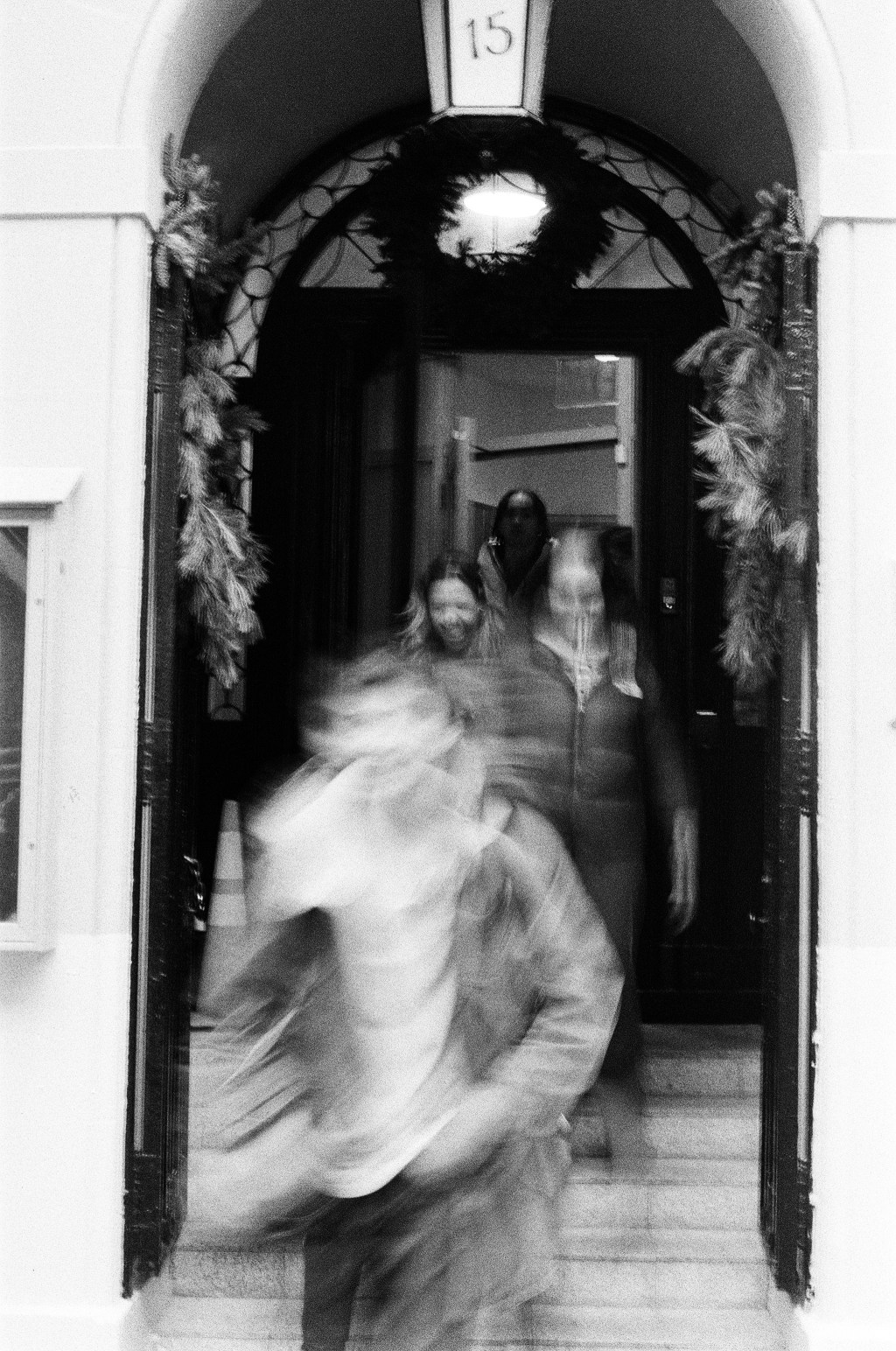
Though any given student at the Rudolf Steiner School’s 15 East 78th street building spends well over a thousand hours within its halls, we rarely spare a second thought for the 120+ years of history behind us. From the first glance, the brick and marble facade bolsters the wealth and status behind the walls that have served as the home of aristocrats, refugees, and our high school student body.
Most of the Upper East Side was developed from the 1870’s to the turn of the 20th century, as Central Park was completed and train lines opened nearby. 15 East 78th Street was built to be a residence in 1901, in an area that was known as the Silk-Stocking District for its wealthy residents and elite social scene. After serving as the home of the high society English couple, Urban Hanlon Broughton and his wife, Cara Leland Rogers, for more than twenty years, it was bought by the Aldrich family at the height of the roaring twenties.
Alexander “Sam” Aldrich grew up in the Upper East Side as one of the most privileged men in America during a time of devastating economic hardship. In his own words, “I grew up in the early 1930s at the bottom of the depression, when people were selling apples on street corners. The stock market crash of 1929 and the Great Depression that followed had less impact on us than on almost anyone else, a fact that dominated my entire childhood.” It is possible that watching people line up for soup kitchens from a brownstone window sent him down the path of public service, reforming juvenile offenders and pushing to clean up the Hudson River Valley, the first chapter in the environmental movement. In his memoir, Dancing with the Queen, Marching With the King, which follows his life from an aristocratic childhood in New York City to marching with Martin Luther King Jr. in Alabama in 1965, we get our first description of the residence.
From Aldrich’s brief description we can tell that much of the building would have looked like the second floor, with mahogany floors, sumptuous molding, and paneled windows. The basement was a kitchen while the common room was a dining room. 2F was the library, as it is today, and the assembly room was a parlor. The third and fourth floors were bedrooms, with young Sam Aldrich’s room in what is now the lab. We can still see the ghost of his childhood in the little boat designs decorating the fireplace there. The top two floors were the servants’ quarters, and there was only one staircase, certainly grand and lavish like the one in the lower school today. Every window was covered in strong iron bars to keep kidnappers out, as a few years earlier the high-profile Lindbergh abduction and murder had seen a child in New Jersey snatched from his crib. At only six stories, Aldrich considered it a modest home compared to many of his peers’.
His father, Winthrop Aldrich, who purchased the townhouse in 1927, was also a notable character. He was an international businessman, serving as the board chairman of Chase Bank for twenty-three years. He was appointed by President Eisenhower in 1953 to be ambassador to the United Kingdom, where he quelled tensions for four years during the Suez Canal crisis. His sister married John D. Rockefeller Jr., one of the richest and most powerful men in American history. It was this kind of wealth that allowed Winthrop to buy 15 East 78th Street for $200,000 (over $3.5 million today) along with his other properties up and down the eastern seaboard. In 1951, he sold the building in preparation for his appointment in the U.K., and by 1955, it had been acquired by the Rudolf Steiner School to expand their elementary program with more grades. This, however, was not the last time this building was a home. After the Aldriches, there were the Kaufmans.
The Kaufmans couldn’t have been more different. Instead of being fabulously wealthy aristocrats, they were refugees from WWII Germany. Having lost their mother, they arrived in New York City as a father and three young daughters. The father, Hans Kaufman, had been the custodian of a Waldorf school back in Germany and turned to the Steiner School for help in getting employment or a place to stay. Henry Barnes, who was the president of the College of Teachers at the time, let him renovate and make a home on the sixth floor as the building was still under redevelopment, having the single staircase split into two to adhere to fire code regulations. The top floors became the Kaufmans’ own apartment, with 6RR serving as a kitchen and 6R as bedrooms. The bathrooms were in the central locker area and 6F was a sitting room.
By Ms. Bärtges’ time in high school, all three girls were enrolled at Steiner, and Hans was the custodian. Their short commute was envied by all. By the seventies, two of his daughters had moved out, one of them eventually becoming the chef at the Green Meadow Waldorf school, and the school needed 6F as a classroom. After serving the school for over twenty years, Hans Kaufman retired to the German neighborhood of Yorkville, and the school was never lived in again.
For the past 50 years, the building has dutifully served generations of Steiner students. Though it has some caveats, like shoddy heating, an unreliable elevator, and a small footprint, the architecture provides a good atmosphere for socializing and learning and brings students together (literally in the case of some of the smaller rooms). Some of the more domestic features, such as the fireplaces and closets, maintain the feel of a townhouse, fitting for a space that serves as a second home for the student body.




 15 East