By Niko Antonides
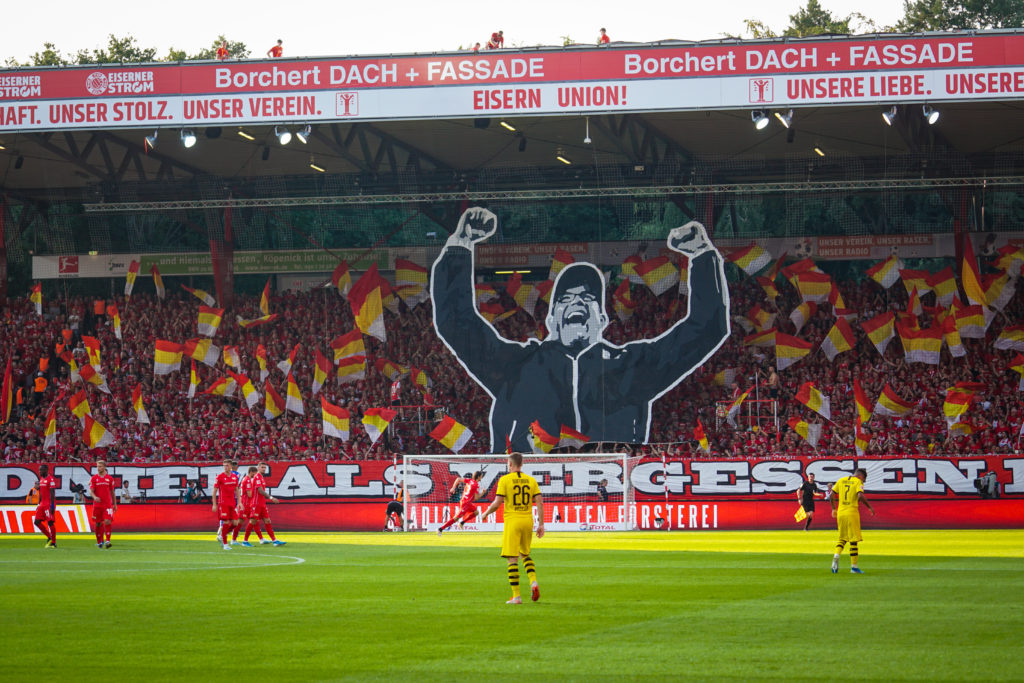
FC Union Berlin is a professional German soccer team officially founded in 1966 which shares a remarkable story of struggles unique to any soccer club. In this article we will be taking a closer look at how this club came from humble beginnings and worked its way up, establishing itself at the highest level of professional soccer.
Union Berlin traces its history back to 1906 when a group of local clubs came together to form FC Olympia 06 Oberschöneweide. This amalgamation of local clubs performed extremely well and even made it to the German Championship finals in the 1923-1924 season. Nevertheless, it was the club’s distinguished nickname that gained popularity. The nickname, “Iron Berlin” which referenced the club’s predominant working-class background, became a symbol of strength and fostered a sense of community and comradeship for the low-class population. At the end of World War Two, the club performed well until the country was divided up and Union Berlin found itself performing poorly. Dismayingly, when the Berlin Wall went up in 1961, the team had dropped to the third tier of East German football.
Five years later in 1966 the club was formally renamed to, “ 1. FC Union Berlin” and stood opposed to two other Berlin based clubs, BFC Dynamo and Vorwärts Berlin. The only major victory Union Berlin won in this time was two years later in 1968 when they won the East German Cup. Regardless of this, the club soon majorly progressed especially with the reunification of East and West Germany which caused the integration of both countries’ clubs into one set of new divisions. Union Berlin found itself in the third tier of the newly founded German soccer leagues but pushing strongly for a promotion. This promotion came after a strong season in 2000/2001 the club advanced to the 2. Bundesliga for the first time in its history. This rise in rank was not settled for long and after two seasons in this new league the club faltered and was relegated. Nevertheless, things got worse as the club did not have the 1.5 million euros necessary to pay for the registration fee in order to reenter the lower Regionalliga (a.k.a the 3. Liga). Union Berlin was facing bankruptcy but the answer to its problem was not one that came from the club, its players or supportive agencies such as sponsors around it, the solution came from its fans. The dedicated fans of Union Berlin lined up to donate blood and use the money received to pay the club’s registration fee.
In 2008 the club had successfully worked its way back to the 2. Bundesliga but was once again facing financial issues this time regarding the renovation of the club’s stadium Alten Forstere. The crumbling arena did not meet the necessary requirements to be granted a license to play and was renewedly threatened, but Union Berlin fans once again stepped to the occasion. Nearly 2000 fans put in 140,000 hours of voluntary work, all to get their beloved club’s stadium up to standard and turn it into the modern-day state-of-the-art stadium we know it as today.
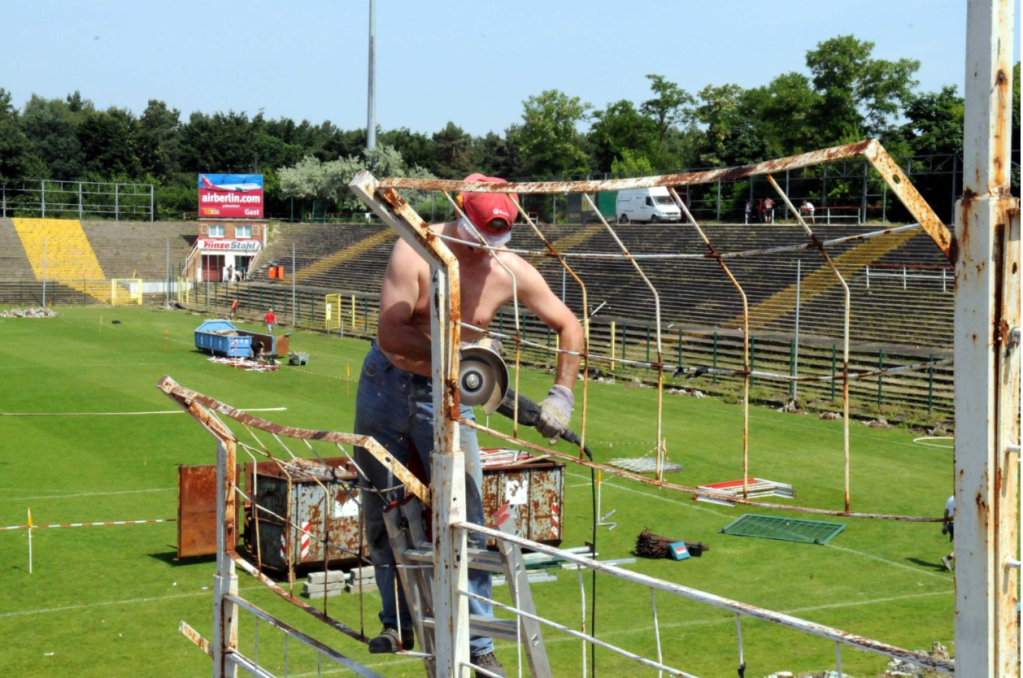
A fan volunteer gets to work dismantling the old fences during the renovation in 2008. © Matthias Koch
Throughout the next ten years Union Berlin continued to perform in the 2. Liga till under the coach Urs Fischer Union Berlin was promoted to the Bundesliga and makes its first official appearance in the league in 2019. From then on till today Union Berlin has continued to perform at this level while also having participated in the Conference League and most recently in 2022/2023 in the UEFA Europa League where they made it to the quarter finals.
Overall, the history of Union Berlin and their gradual come up over the last century shows a remarkable story of soccer and fan dedication to the team. From this unique history we can truly understand the deep connection and sense of community a soccer club can cultivate and what profound meaning it can have for its supporters.




 15 East